Definitions
“LSST data” are any of the proprietary materials from the Rubin Observatory LSST, including, but not limited to, images, daily release catalogues, annual data release catalogues and simulations.
“SA research organization” is a South African University, National Facility or equivalent organization.
“PI” means South African LSST Principal Investigator Affiliate.
“JA” means Junior Associate, usually of a PI.
“FTE” means full time equivalent.
“AURA” is the USA Association of Universities for Research in Astronomy.
“SLAC” is the United States Department of Energy National Laboratory operated by Stanford University.
The “South African LSST Committee” is nominated by and serves in an advisory capacity to the SAAO Managing Director. Its purpose is to oversee the participation of the South African scientific community in LSST, in order to maximize the return of scientific knowledge and human capital development.
1. Background
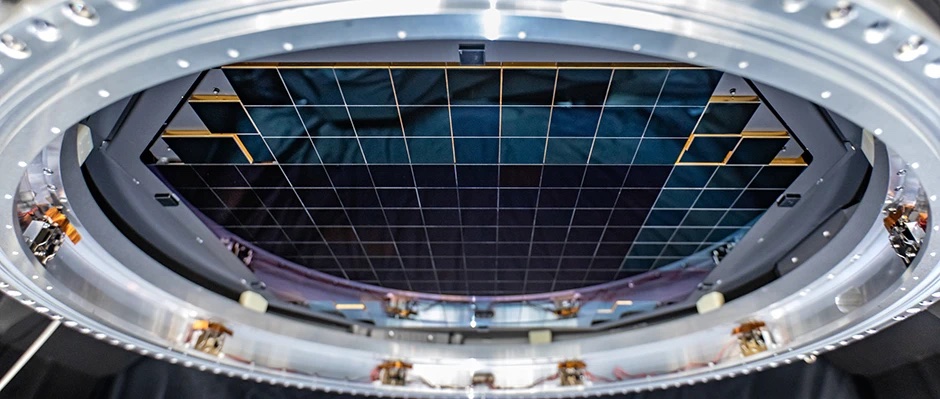
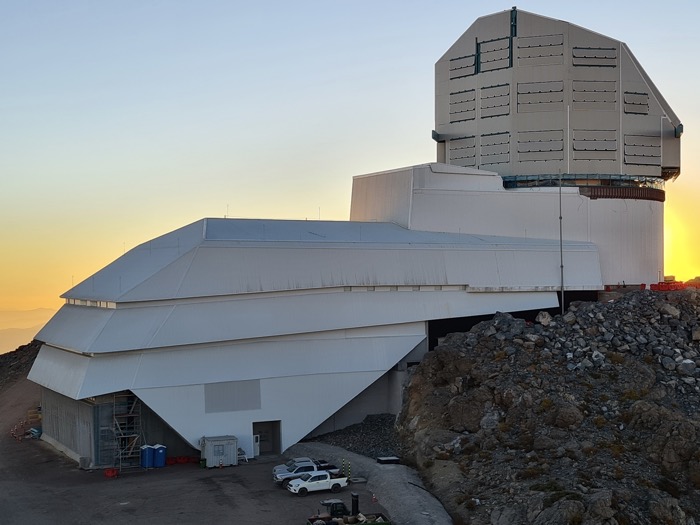
The Vera C. Rubin Observatory, a United States-funded project under construction in Chile, will provide a unique Legacy Survey of Space and Time (LSST), covering the sky that is also accessible from South Africa. The Rubin Observatory’s data will greatly enhance the science outputs from other leading Southern astronomy facilities, including SALT and MeerKAT. The Rubin Observatory is expected to have a major impact on a variety of areas in modern astrophysics, and in particular it will be the world’s premier observational facility for optical time-domain astronomy. Optimal exploitation of its enormous database will also benefit from developments in data science. First light was achieved in 2025 and full science operations are expected to start in 2026 and continue for at least 10 years. The scientific exploitation of data and data products produced by the Rubin Observatory before and during its operations phase is ordinarily restricted to researchers located in the USA and Chile. However, equivalent access will be provided to a restricted number of other researchers whose community have pledged an in-kind contribution that will “expand the resources available to the USA astrophysical and high energy physics communities.”
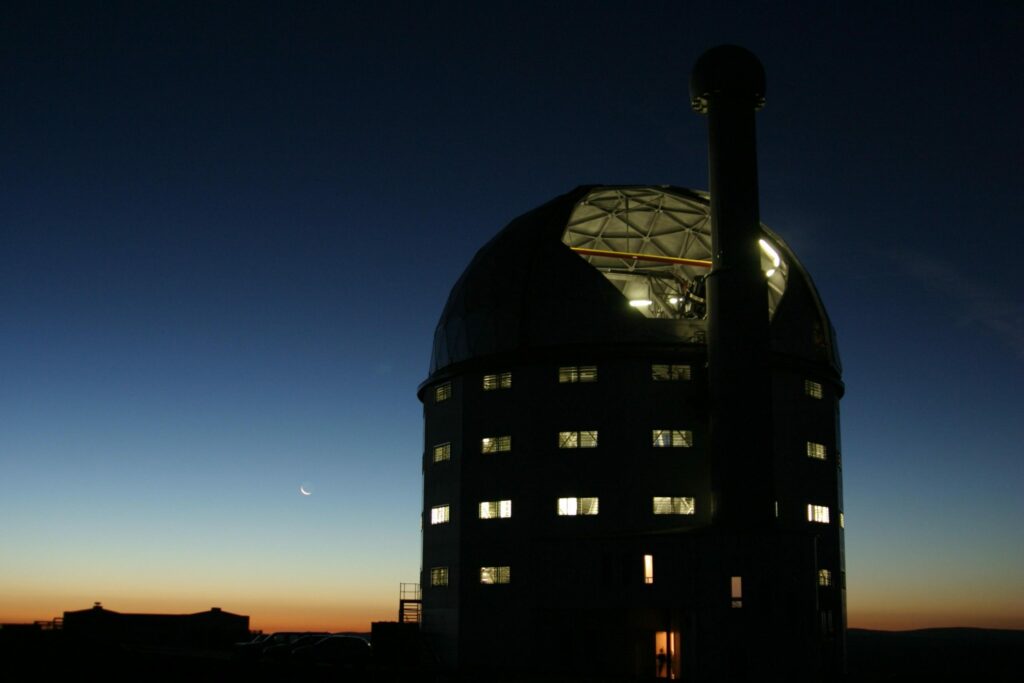
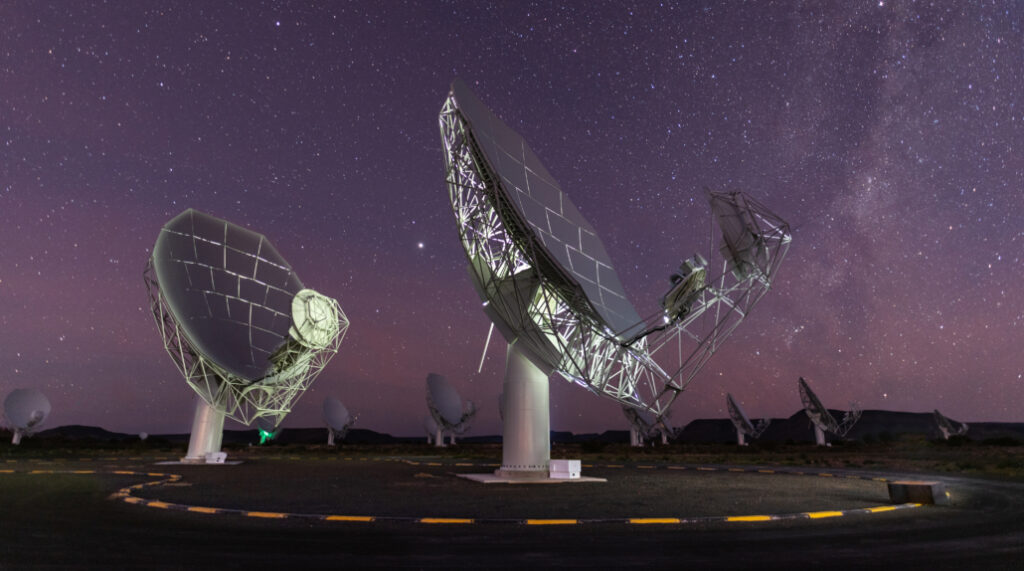
South Africa will provide telescope time and software and catalogue development effort as the in-kind contribution from our community. In return South Africa has been awarded 10 PI slots for permanent staff and faculty, and a larger number of Junior Associate (JA) slots for postdocs and students.
South Africa currently has nine PI Affiliates and one open position.
Researchers, based in South Africa for at least 50% of their time, are hereby invited to apply for the tenth position. This document provides information about the positions, and the requirements of the Call.
Rubin Observatory has already started its near-real-time alert system and anticipate that the survey itself will start later in 2026. Each PI is expected to formulate a compelling research plan that takes advantage of access to LSST image data, daily release catalogues, annual data release catalogues, and LSST-operated Data Access Centres during the operations phase. Each PI will also organize a team of JAs to successfully carry out the research plan. All team members will have full access to proprietary LSST products equivalent to that of USA researchers, and will be eligible to join LSST Science Collaborations. Team members will be required to strictly follow the rules regarding redistribution of LSST data and data products.
The document https://docushare.lsst.org/docushare/dsweb/Get/RDO-13 describes the Rubin Observatory Data Policy in some detail and is the reference document for the South Africa policy underlying this Call. If you are uncertain about your need to access the proprietary data, please read this to find out what will be publically available. Section 8 of that document gives you a good idea of what you can do without getting formal access to LSST data.
2. Applications
Applicants can submit a completed proposal application form online. Submissions received by 2026 April 30 23:59 will be examined first. If no suitable candidate is identified the position will remain open until one is found.
It is essential that all components of the application form be completed in full. Incomplete applications may be rejected.
3. Eligibility
PI applicants must be in possession of a PhD and have a long-term (at least 5 years) post at a SA research organization. While full-time South African-based appointments are preferred, 50% SA-based appointments will be eligible. PIs or JAs who leave South Africa will relinquish their position in terms of this Call and their associated rights to LSST data. Moving from one South African research organization to another will not affect the status of a PI or JA, provided they otherwise still meet the eligibility criteria and continue to carry out the approved project.
4. Term
The activities of PIs and their teams will be reviewed annually, by appropriate members of the SA LSST Committee, against the approved research proposal and annual updates. A PI’s position may be revoked if progress is deemed inadequate.
PIs are appointed primarily on the strength of their scientific case. They will be evaluated both on their science and on the progress of their JAs, who are expected to be involved in relevant international collaborations and actively participating in the science.
5. Junior Associates (JAs)
Under the original agreement between the NRF and the LSST Corporation, each South African Principal Investigator (PI) may nominate up to eight Junior Associates (JAs), who are granted access to LSST data.
All JAs must be affiliated with an African research organisation, although this does not need to be the same institution as the PI.
This large number of Junior Affiliates was agreed by the Vera C. Rubin Observatory in acknowledgment of the need to transform our community in South Africa. Applicants should keep this in mind when making their case and be aware that equity and inclusion will be important in selecting the new PI as well as in their annual evaluation.
The SA LSST Committee would like to see all PIs training four or more students, but would prefer JAs who are actively engaged in LSST-related projects rather than filling all available slots with individuals whose work is not closely aligned with LSST.
5.1 Categories of Junior Associates
All JAs should be South African citizens, permanent residents, or nationals of other African countries. A specific motivation must be provided if you wish to appoint anyone else. These JAs may fall into the following categories:
- PhD or MSc students – At least half of a PI’s JAs must be students.
- Postdoctoral researchers on short-term contracts
- Early-career scientists in permanent positions – Within five years of obtaining their PhD.
Special Provision (JAs from formerly disadvantaged communities)
In 2024, the Rubin Observatory Director agreed that South Africans from historically disadvantaged communities may continue as JAs until they reach a level of seniority that would normally qualify them to apply for a PI position (e.g. Associate Professor or the equivalent at a National Facility).
If such a level is reached but no PI position is available, the SA LSST Committee, together with the JA’s PI mentor, may petition the Rubin Observatory Operations Director to allow the individual to continue as a JA for an extended period.
5.2 Expectations for PI Proposals
Prospective PIs must:
- List the proposed project team in their application.
- Clearly describe the role of each team member.
If specific individuals have not yet been identified, placeholders may be used (e.g. “1 MSc student” and “1 PhD student”), but the intended roles must be clearly defined.
A team may grow over time, provided it remains within the JA limits and category constraints described above. Already identified JAs should be named. Proposals are strengthened by clearly specifying the intended roles and contributions of each JA.
5.3 Approval and Data Access
All JAs must:
• Be approved by the SA LSST Committee.
• Be registered with the LSST Corporation via the Project Manager before receiving access to LSST data.
• Agree to comply with all LSST data use and redistribution policies.
5.4 Participation in Science Collaborations
JAs are strongly encouraged to join a Rubin Observatory Science Collaboration once they have data rights. Participation in these collaborations is one of the principal benefits of involvement in Rubin Observatory activities.
5.5 Change in PI Status
If a PI loses their status, the JAs associated with that PI would normally also lose their JA status. However, the SA LSST Committee will review such cases individually and, where appropriate, seek a solution that allows suitable researchers to continue under an approved LSST activity.
5.6 Junior Associates Without a South African PI
In certain circumstances, it is possible to become a South African Junior Associate (SA JA) without being directly linked to a South African PI. This may arise, for example, when a South African postdoctoral researcher or student is collaborating with a US-based colleague and requires access to LSST data for that work.
Individuals in this situation should email the Project Manager with full details of the proposed arrangement, including the name and affiliation of the US collaborator or other individual with LSST data-rights. This collaborator will be expected to act as the mentor with regard to LSST data use.
Before applying, applicants should consult the RDO-13 document (see Section 1) to confirm that full access to LSST data is genuinely required for their research.
6. Science Case
The selection of PIs will primarily rest on the strength of the proposed science case and the feasibility to achieve it within the relevant constraints. You should:
- Describe the scientific (and possibly technical) question(s) that you intend to address within their appropriate context, and how your specific project addresses them.
- LSST data are expected to be available from 2026, although this will initially be quite limited. You should indicate what you can do starting immediately.
- Provide a timeline indicating your project plan over the course of three to five years.
- Provide evidence that you and (if relevant) your assembled team have the expertise required to carry out the proposed plans.
- Describe how your proposal links to astronomical facilities/programmes in South Africa. Multi-wavelength aspects of the proposal, especially connections to SAAO/SALT science, while not required, will be a strength.
7. Science Collaborations
It is anticipated that successful SA LSST PIs will work in collaboration with relevant existing LSST Science Collaborations. We therefore strongly encourage prospective PIs to begin developing links with relevant Science Collaborations prior to submission of the proposal. We anticipate that all PIs, and their JAs, will seek membership in one or more of the Science Collaborations. Note, however, that membership of LSST Science Collaborations is by invitation, and holding PI Affiliate or Junior Associate status does not guarantee acceptance into a Collaboration. Outline any existing links with the relevant Collaboration(s) and/or describe communications that you have had with them in regard of membership. Details of the collaborations are given here: https://www.lsstcorporation.org/science-collaborations.
8. LSST Computing Resources
Querying and manipulating large subsets of LSST data will require access to significant computing equipment. The SA PIs will have access to the Rubin Interim Data Facility (IDF). The IDF is a testbed for the eventual US Data Facility, which will include the primary Rubin Data Access Centre. There will be other, independent data access centres (IDACs) in a global network. The plan is for all of them to use the same Rubin authentication system, such that all data rights holders will be able to apply for a Rubin “LSST user” account that allows them to log in to any DAC and work with the LSST data there.
9. Management Plan
This should include anticipated partnerships (national and international) that will be required to achieve the scientific goals alluded to in Section 6. Depending on your programme it might also describe how you will link to other necessary resources.
10. Budget
The DSTI does not currently have dedicated funds for SA involvement in LSST.
It is therefore vital that you provide a clear idea of what resources are required for your project to succeed and how you intend to seek those resources. It is not necessarily expected that you will have identified all the required support at the time of submission, but successful proposals will outline a realistic roadmap to obtaining the required resources. With this in mind you should outline the budget that you will need over the next three to five years to implement your proposal, and indicate what level of support you anticipate from your home institution or those of relevant JA colleagues, and how else you anticipate obtaining resources, including for bursary support. Include costs associated with students, postdocs, travel, and IT, plus anything else that you consider relevant. Motivating a realistic plan to adequately support a smaller number of JAs and constructing a research programme around that team (that could grow in time) is preferable to outlining a larger team without a realistic support plan.
11. Equity, Transformation and Human Capacity Development
Describe how your proposed project will contribute to equity, transformation, and human capacity development in South Africa over (at least) the first 3 years of the project. The PIs will have access to products prepared by LSST for Education and Public Outreach activities, which may be shared openly with South African outreach communities and with the IAU Office of Astronomy for Development (OAD). Describe how you expect to make use of this resource.
12. Time Commitment for LSST Activities
We anticipate that LSST work will represent a major research focus for successful PIs. While the fraction of time dedicated to LSST activities may grow over time, it is expected that successful PIs will devote some significant fraction of their time to LSST activities Please indicate the expected fraction of your time in FTEs that you intend to dedicate to the proposed activities on a year-by-year basis. Also indicate how you will shift the balance of your current activities in order to realistically dedicate the required time to LSST activities.
The proposal should also indicate expected time commitments for LSST activities by each member of the team.
13. Proposal Review and Selection Criteria
Assessment of the proposals will be overseen by the SA LSST Committee in a non-conflicted manner. LSST PIs may serve on the SA LSST committee only if their contribution to the Rubin Observatory results in additional PI positions for South Africa in terms of the in-kind agreement, and must recuse themselves from any consideration that involves them or their JAs. The Committee may invite external experts to help it assess the proposals as needed. Only one PI position is currently available and we hope to fill this as soon as possible.
The proposals will be assessed on the strength of their proposed science case and the feasibility of achieving it (including the strength of the team and of the management/resourcing plan, and interactions with LSST Science Collaborations), as well as on the plans to advance equity, transformation, and human capital development. Connections to SAAO/SALT and MeerKAT/SKA science will also be considered.
14. Further Information
Further information is available by contacting the Project Manager paw@saao.ac.za.
15. Current membership of SA LSST Committee
The members of the SA LSST Committee are listed on this page.
16. Applications
Please use the online application form to submit your South African LSST PI proposal.